
The Snapchat Solar System has quickly become one of the most talked-about features of Snapchat+. By using planets to represent your closest friends, Snapchat has added a playful yet competitive twist to digital relationships. But what exactly does it mean when someone is your Mercury, Earth, or Neptune in the Snapchat Solar System?
In this detailed guide, we’ll explain everything about the Snapchat Solar System, including how it works, what each planet represents, how rankings are calculated, and whether this premium feature is worth subscribing to.
The Viral Snapchat Solar System Trend
Snapchat has always been a platform built around personal connections. From Snap Streaks to Best Friends lists, the app has consistently gamified communication to keep people engaged. In 2022, Snapchat launched Snapchat+, a paid subscription service that unlocks experimental and exclusive features. Among these, the Snapchat Solar System has stood out as one of the most popular and controversial.
The feature went viral on TikTok, Instagram, and Twitter (now X), with users posting screenshots of their planet ranks and debating what they reveal about friendships. Some saw it as a fun, lighthearted tool, while others worried it could cause unnecessary jealousy or awkwardness in relationships.
So why all the buzz? Because the Snapchat Solar System essentially ranks your friendships and displays them visually as planets — turning private interactions into a cosmic game of closeness
What is the Snapchat Solar System ?
The Snapchat Solar System is a Snapchat+ exclusive feature that visualizes how close you are to your friends on Snapchat. Here’s how it works:
- You are the Sun – the center of your own universe.
- Your friends are planets – their position depends on how often you interact with them.
- The closer a planet is to the Sun, the stronger your connection with that friend.
For example:
- Your #1 closest friend is represented as Mercury, the closest planet to the Sun.
- A less interactive friend may show up as Saturn or Neptune, positioned farther away.
This ranking is dynamic, meaning it changes over time depending on how much you snap, chat, or engage with that person.
Snapchat Solar System Planets Explained (Full List)
There are eight planets in the Snapchat Solar System, each representing a different level of closeness. Let’s break them down in detail:
Mercury – The Closest Friend
- Represents your #1 best friend on Snapchat.
- This is the person you send snaps and chats to the most.
- They also interact with you frequently, making it a mutual top-ranking friendship.
Venus – The Second Closest
- Your #2 best friend in terms of interaction.
- Still highly engaged but not as dominant as Mercury.
- Often someone you snap daily but with slightly less intensity.
Earth – The Third Closest
- Your third closest friend.
- Interactions are consistent, but not as frequent as with Mercury or Venus.
- May include people you talk to often during specific times (like work colleagues or classmates).
Mars – The Fourth Closest
- Represents the fourth level of closeness.
- Still active, but interactions may fluctuate more compared to your top three.
Jupiter – Mid-Level Best Friend
- A friend who sits in the middle tier.
- You exchange snaps often, but they’re not among your absolute favorites.
- Jupiter is often where casual but frequent friendships are ranked
Saturn – Lower Close Friend
- Saturn usually represents a friend who was once very active but has dropped in interaction.
- Still within your best friends list, but engagement has slowed.
Uranus – Second Last
- A friend who has low engagement compared to others.
- Still considered “close,” but you may only snap occasionally.
Neptune – The Farthest Friend
- Represents your 8th closest friend in the Solar System.
- This is the weakest of your “best friend” interactions.
- If someone is Neptune, they’re still important but less active than others.
Note: Not every friend will have a planet. Only those in your Best Friends list are ranked within the Solar System.
Snapchat+ and Why You Need It to Access the Solar System

The Snapchat Solar System isn’t available for free users. It’s an exclusive feature of Snapchat+, a paid subscription service launched in June 2022.
Snapchat+ Pricing
- Costs around $3.99/month (may vary by region).
- Discounts available on annual subscriptions.
Other Snapchat+ Features
- Pin a #1 Best Friend for easier access.
- Custom App Icons for your home screen.
- Priority Replies to celebrities and influencers.
- Experimental Features – try out tools before public release.
For many, the Solar System alone is reason enough to subscribe, especially since it provides a unique and interactive way to measure friendships.
How Snapchat Calculates Friendship Rankings
The Snapchat Solar System rankings are based on Snapchat’s interaction algorithm. It considers multiple factors to decide which planet your friend becomes:
- Snap Frequency – How often you send and receive snaps with someone.
- Snap Streaks – Whether you’ve maintained daily communication.
- Chat Activity – Number of messages exchanged in chats.
- Story Engagement – If you regularly view and respond to their stories.
- Relative Engagement – Interaction with this person compared to others.
Example:
If you snap one person 20 times a day and another just 2 times, the first person will rank closer to the Sun.
Since the algorithm constantly updates, rankings can shift. A Mercury today might turn into Earth or even Neptune if engagement drops.
Step-by-Step Guide: How to See Your Snapchat Solar System
Here’s exactly how to check your Solar System planets:
Step 1: Subscribe to Snapchat+
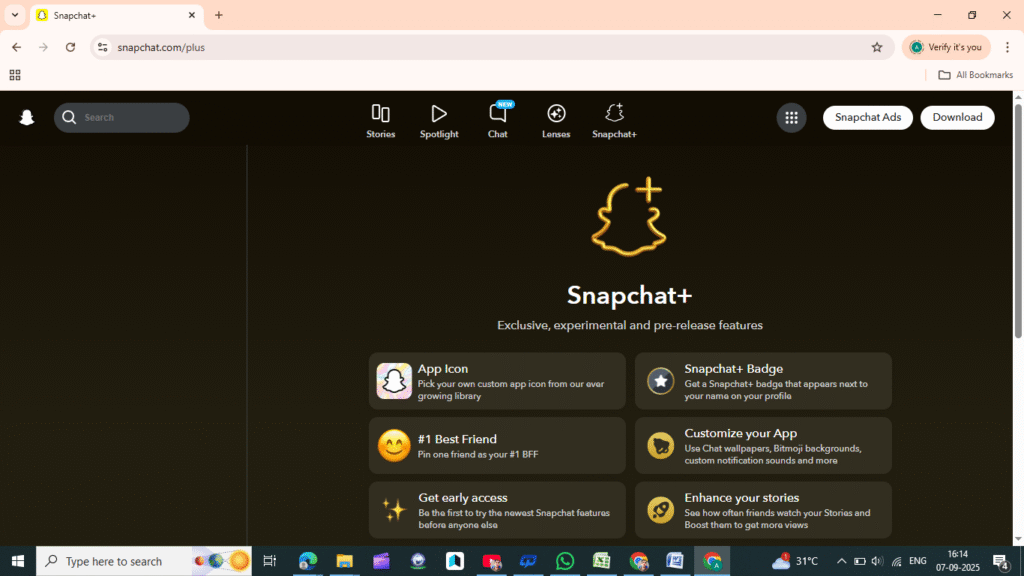
- The Solar System is locked behind Snapchat+.
- Open Snapchat and go to your profile by tapping your Bitmoji avatar in the top left corner.
- Look for the Snapchat+ banner (it usually shows a star logo ).
- Tap it and choose a subscription plan:
- $3.99/month (varies by region)
- Or a discounted annual plan
- Once subscribed, you’ll see a gold star badge on your profile confirming your Snapchat+ access.
Note: Without Snapchat+, you won’t be able to see planets or rankings.
Step 2: Open Your Chat List
- After activating Snapchat+, go back to your Chat screen.
- Here you’ll see a list of friends you interact with.
- Only those who are part of your Best Friends list are eligible for Solar System ranking.
Tip: Snapchat defines “Best Friends” based on consistent interaction, not just recent snaps.
Step 3: Select a Friend to View
- Tap on the chat of the friend you want to check.
- Inside the chat window, click on their profile icon (Bitmoji) at the top left.
- This will open their Friendship Profile, where you can see streaks, saved messages, and shared info.
Step 4: Look for the Best Friends Badge
- On the Friendship Profile, scroll until you see badges.
- If you and this person are Best Friends, you’ll see a “Best Friends” badge.
- Snapchat+ users will notice that this badge looks slightly different compared to normal — it includes planet ranks.
Step 5: View Your Planet Rank in Their Solar System
- Tap the badge to reveal your Snapchat Solar System position.
- Example:
- If you’re Mercury, you’ll see an icon with Mercury orbiting close to the Sun.
- It will also show text like “You’re their closest friend!”.
- If you’re Jupiter, the description might say “You’re their 5th closest friend.”
This is how Snapchat gamifies friendships — by visually showing your place in someone else’s digital universe.
Step 6: Understand Why You Might Not See a Planet
Not everyone will show up in your Solar System. Reasons include:
- Not in Their Best Friends List: If you don’t interact enough, you won’t be ranked at all.
- They Don’t Have Snapchat+: The Solar System only works if your friend also has Snapchat+.
- Temporary Fluctuations: If rankings update and you fall off the list, you won’t see your planet until your interaction improves.
Step 7: Keep Track of Changes
Your planet rank isn’t fixed. It updates as your interaction patterns change. For example:
- If you start snapping someone daily, you could move from Saturn → Earth.
- If you stop chatting for a week, you might slide down to Uranus or Neptune.
Many users check their planet rank weekly to see how their friendships evolve.
Step 8: Compare With Your Own Solar System
Another interesting detail:
- You might be Mercury in your friend’s Solar System, but they could be Mars in yours.
- This is because rankings are personalized — based on your engagement with them vs. their engagement with you.
This mismatch sometimes creates funny or awkward moments between friends when they compare ranks.
Final Thoughts: Is the Solar System Feature Worth It
The Snapchat Solar System has become one of the most exciting additions to Snapchat+. By transforming your closest friends into planets orbiting around you, the Sun, it makes digital friendships feel playful and competitive.
For users who enjoy streaks, Snap Maps, and fun challenges, this feature adds extra value. It’s engaging, gives insight into your top friendships, and is often a conversation starter. Checking whether you’re Mercury or Neptune in someone’s universe can be both fun and addictive.
However, the Solar System isn’t perfect. Rankings are based only on in-app activity, which may not always reflect real-life relationships. This can sometimes cause misunderstandings or even small dramas between friends. Another limitation is that it’s exclusive to Snapchat+ subscribers, meaning you need to pay for access.
So, is it worth it? If you enjoy Snapchat’s gamified features and don’t mind the subscription fee, the Solar System is a fun way to add excitement to your interactions. But if you prefer a simple, drama-free experience, you can safely skip it without losing core Snapchat functions.
FAQs About Snapchat Solar System
1. What is the Snapchat Solar System?
The Snapchat Solar System is a Snapchat+ feature that ranks your closest friends as planets orbiting around you, the Sun. Your top friend is Mercury, while lower-ranked friends appear as planets farther out, like Saturn or Neptune.
2. Do I need Snapchat+ to use the Solar System?
Yes. The Snapchat Solar System is exclusive to Snapchat+ subscribers. Free users cannot access or view their planet rankings.
3. How does Snapchat decide which planet I get?
Your planet rank in the Snapchat Solar System is based on:
- How often you send snaps.
- How frequently you chat.
- Whether you interact with each other’s stories.
- Overall engagement compared to other friends.
The more you interact, the closer you’ll be to the Sun (Mercury, Venus, Earth).
4. Can I change my planet in the Snapchat Solar System?
Yes, but not directly. To move closer to the Sun, you need to increase your interaction with that friend. Sending more snaps, keeping streaks alive, and chatting daily can improve your ranking.
5. Why don’t I see a planet for some friends?
There are a few reasons:
- You’re not in their Best Friends list.
- They don’t have Snapchat+.
- Your interactions aren’t high enough to qualify for a rank.
6. Can other people see my planet rank?
Yes. If your friend has Snapchat+, they can see your planet rank in their Solar System. You cannot hide your position.
7. Is the Snapchat Solar System accurate?
The Snapchat Solar System is fairly accurate since it’s based on interaction data. However, rankings can change quickly if you start engaging more (or less) with someone, which may feel unstable to some users.
8. Can my planet rank be different in my friend’s Solar System?
Yes. You might be Mercury in their Solar System but Mars or Jupiter in yours. This happens because the ranking is personalized and based on individual engagement, not mutual ranking.
9. Does the Snapchat Solar System cause drama?
Sometimes, yes. Many users compare planets, leading to jealousy or awkward conversations if someone expected to be Mercury but is Neptune instead. Still, most people treat it as a fun and playful feature.
10. Is the Snapchat Solar System worth trying?
If you enjoy Snapchat streaks, filters, and gamified features, the Solar System is fun and addictive. But since it requires Snapchat+, you’ll need to decide if it’s worth the monthly subscription.
Read More….